Capital Region Ring Road 4: The 85,800 Billion VND Infrastru | Bùi Nguyệt Minh Realtor
Market Analysis
Capital Region Ring Road 4: The 85,800 Billion VND Infrastructure Catalyst and the Reshaping of Satellite Real Estate
Ms. Bui Nguyet MinhREALTOR | IQI Vietnam
•Oct 1, 2026•16 min read
"Strategic analysis of the 85,813 billion VND Ring Road 4, delivery timelines of Hong Ha and Me So bridges, and capital allocation frameworks for satellite master-planned real estate."
Share this analysis:
Enquire About This Property
Leave your details to receive full project dossiers, market analysis & 1-on-1 direct advisory.
Master planning rendering of Capital Region Ring Road 4, the strategic arterial corridor unlocking satellite urban expansion.
Capital Region Ring Road 4: The 85,800 Billion VND Infrastructure Catalyst and the Reshaping of Satellite Real Estate
The Capital Region Ring Road 4 project represents a transformative regional transit development with an approved capital outlay of 85,813 billion VND, serving a decisive role in alleviating cross-city traffic congestion on Ring Road 3. This monumental infrastructure corridor expands modern urban development toward surrounding satellite provinces, re-establishing asset valuation benchmarks and sustainable cash flow yields across Northern Vietnam.
For institutional capital allocators and discerning private investors, the commissioning of this 112.8-kilometer arterial expressway presents substantial capital appreciation opportunities while necessitating conservative portfolio allocation. Mastering real-world construction cycles alongside rigorous liquidity controls serves as the cornerstone for durable wealth preservation.
1. Resolution 56/2022/QH15 Framework: The 85,813 Billion VND Capital Structure and 112.8-Km Alignment
The Capital Region Ring Road 4 was officially ratified by the National Assembly under Resolution No. 56/2022/QH15 with a total estimated investment of 85,813 billion VND across 112.8 kilometers through Hanoi, Hung Yen, and Bac Ninh. This arterial expressway resolves central urban congestion while systematically restructuring the spatial development framework across Northern Vietnam.
The financial structuring of the project is engineered to guarantee transparent capital allocation and steady disbursement throughout all execution phases. Public budgetary contributions account for 66% of total capital expenditure, representing more than 56,400 billion VND from central and local budgets to finance site clearance compensation and twin parallel urban service roads.
The remaining capital requirement of over 29,400 billion VND is mobilized through public-private partnership PPP frameworks under Build-Operate-Transfer BOT concession contracts to construct the four-lane elevated expressway. This public-private collaboration model eliminates fiscal bottleneck risks and establishes lasting confidence for institutional investors.
Source: Vietnam Government e-Portal, Resolution No. 56/2022/QH15 on investment policy for Capital Region Ring Road 4.
From an administrative perspective, the 112.8-kilometer alignment is strategically distributed across three key economic drivers in the Northern region. Compulsory land acquisition for the entire corridor encompasses an unprecedented 1,341 hectares, requiring coordinated administrative leadership across all governance levels:
Hanoi Section: Encompassing 58.2 kilometers across seven suburban districts including Soc Son, Me Linh, Dan Phuong, Hoai Duc, Thanh Oai, Thuong Tin, and Ha Dong.
Hung Yen Section: Spanning 19.3 kilometers across four high-growth districts comprising Van Giang, Yen My, Khoai Chau, and Van Lam.
Bac Ninh Section: Covering 25.6 kilometers through Thuan Thanh town, Gia Binh, and Que Vo, alongside a 9.7-kilometer arterial spur toward the Noi Bai - Ha Long expressway.
This orbital boulevard establishes an integrated transit network linking 8 arterial highways and national expressways at the northern gateway, including Hanoi - Lao Cai, Hanoi - Hai Phong, Cau Gie - Ninh Binh, and Thang Long Boulevard. Consequently, inter-provincial logistics freight will bypass inner-city roads, diverting 30% to 40% of heavy container transit away from the elevated Ring Road 3.
Properties situated at major Ring Road 4 interchanges directly capture regional accessibility premiums, evolving from peripheral rural lands into high-density commercial service centers and luxury mixed-use communities. This serves as the pivotal infrastructure springboard driving long-term economic appreciation for surrounding satellite townships.
"The Capital Region Ring Road 4 is a strategic regional connectivity corridor that creates a major breakthrough in socioeconomic development space and enhances the overall competitiveness of the greater Hanoi metropolitan area."
Trích dẫn
2. Engineering Milestones Across 7 Sub-Projects: 2026 Parallel Roads and Hong Ha, Me So River Bridges
Divided into 7 coordinated sub-projects, Ring Road 4 has achieved over 97% site clearance, with twin parallel service roads scheduled for 80% to 90% physical completion in year 2026. Two monumental river crossings, Hong Ha Bridge and Me So Bridge, are slated for technical commissioning during 2026 - 2027, establishing an uninterrupted satellite township corridor.
The 7 sub-project governance framework represents an administrative breakthrough in public asset delivery, clearly delegating management responsibilities to accelerate execution timelines. Hanoi, Hung Yen, and Bac Ninh each directly administer 2 localized sub-projects, while sub-project 3, encompassing the elevated expressway corridor, is competitively tendered under a centralized procurement structure.
To date, the vast majority of the 1,341 hectares of acquired land has been transferred to primary civil engineering contractors. Twin parallel ground roads in Hanoi and Hung Yen have achieved advanced roadbed grading and asphalt paving, preparing for localized traffic operations by late year 2026.
Civil engineering construction at the Red River bridge crossing on Ring Road 4, ensuring technical commissioning targets across 2026 - 2027.
The two monumental bridges spanning the Red River, Hong Ha Bridge and Me So Bridge, represent vital technological milestones and powerful market repricing catalysts along the route. Both crossings employ advanced balanced cantilever construction methodologies, guaranteeing continuous progress toward structural closure and technical opening during 2026 - 2027:
Hong Ha Bridge: Spanning 6.0 kilometers across the Red River, connecting Me Linh directly with Dan Phuong, permanently removing geographic barriers between northwest riverbanks.
Me So Bridge: Extending nearly 4.0 kilometers to link Thuong Tin in southern Hanoi directly with Van Giang in Hung Yen, establishing a high-speed commercial conduit between major expressways.
Upon completion of these river crossings, inter-provincial commute times between satellite urban centers will be compressed to merely 5 minutes of direct driving. This structural connectivity upgrade fundamentally transforms residential location preferences among multinational corporate executives and skilled professionals.
Vigorous construction progress across bridge and roadway sites inspires immense confidence among master-planned township developers in adjacent corridors. Major real estate developers are accelerating internal utility completions, bilingual educational campuses, and medical healthcare centers to accommodate expanding resident communities.
Seamless vehicular mobility between Hanoi, Bac Ninh, and Hung Yen without relying on overloaded legacy inner bridges redefines suburban luxury living standards. Pristine natural environments, expansive open green spaces, and exceptional transit accessibility combine to deliver compelling lifestyle value for modern satellite master plans.
3. Spatial Urban Reconfiguration: The Growth Poles of Hanoi, Hung Yen, and Bac Ninh
Ring Road 4 fundamentally reconfigures Northern Vietnam real estate dynamics by shifting institutional capital toward three satellite growth poles in Western Hanoi, Hung Yen, and Bac Ninh. By compressing vehicular commute times into central Hanoi to between 25 and 35 minutes, this infrastructure spine drives sustained demand for master-planned ecological townships.
In Hanoi territory, the western and northwestern corridors encompassing Hoai Duc, Dan Phuong, and Me Linh exhibit profound urban transformations. Intersecting Thang Long Boulevard, National Route 32, and the West Thang Long arterial avenue, Ring Road 4 provides residential developments with multimodal regional transit integration:
Me Linh District: Eliminates transit isolation through Hong Ha Bridge, emerging as a high-technology industrial node and master-planned eco-urban sanctuary at the northern gateway.
Dan Phuong and Hoai Duc Districts: Attract substantial institutional capital for luxury commercial shophouses and prime residential villas, benefiting from direct transit corridors into My Dinh and Cau Giay.
Master-planned riverfront eco-townships in Hung Yen directly benefiting from regional connectivity via the Ring Road 4 corridor.
In Hung Yen Province, the districts of Van Giang and Yen My have emerged as primary magnets for institutional capital and large-scale master-planned ecological developments. Anchored by Me So Bridge and the high-speed junction between Ring Road 4 and the Hanoi - Hai Phong expressway, travel times from mega-townships into southern Hanoi are reduced by more than half:
Van Giang: Establishes premier standards for green living through multi-hundred-hectare master plans, attracting thousands of affluent professionals seeking long-term residences.
Capital Appreciation Trajectory: Prime landed properties in this corridor maintain consistent organic price growth between 20% and 30% annually, supported by high actual occupancy rates.
In Bac Ninh Province, the northeastern growth vector is powered by global semiconductor and electronic supply chains anchored by international technology leaders. The 25.6-kilometer Ring Road 4 segment running through Thuan Thanh and Que Vo links primary industrial clusters directly to Noi Bai International Airport and maritime shipping hubs:
Expatriate Housing Demand: Tens of thousands of multinational engineers and senior managers stimulate sustained demand for premium serviced apartments and commercial shophouses.
Defensive Yield Performance: Verified gross rental yields range between 6% and 7% annually, establishing Bac Ninh as an exceptional cash-flow asset haven.
Ring Road 4 is not merely an inter-provincial highway, but a structural economic axis reshaping regional wealth distribution and real estate valuations across the Capital Region for decades to come.
4. Quantitative Financial Structuring and Defensive Debt Management for Elite Capital Allocators
Deploying capital into Ring Road 4 satellite property corridors requires enforcing a conservative 50% loan-to-value ceiling alongside baseline rental yields between 4.5% and 5.5% annually to protect balance sheet liquidity. Utilizing 0% developer-subsidized interest grace periods allows investors to optimize return on equity while mitigating floating interest rate risks.
During major regional transit engineering cycles, actual operational opening dates can experience technical adjustments of 6 to 12 months due to complex ground conditions. Investors who over-leverage balance sheets with excessive bank financing risk facing severe debt servicing strain upon expiration of preferential subsidy periods.
A disciplined capital deployment strategy consists of committing 50% cash equity alongside 50% preferential bank debt, structured with principal grace periods and developer interest support matching the construction timeline. This balanced structure empowers capital allocators to secure prime real estate assets while retaining complete balance sheet liquidity.
Dedicated financial structuring and portfolio management consultation space for Ring Road 4 infrastructure opportunities by Ms. Bùi Nguyệt Minh.
The following quantitative model provides a comparative financial assessment between an all-equity acquisition versus a structured 50% loan allocation with a 24-month interest grace period for a 12.0 billion VND prime satellite commercial villa:
Financial Metric
Scenario 1: 100% Cash Equity
Scenario 2: 50% Prudent Leverage (24-Month Grace)
Initial Equity Capital Disbursed
12.0 Billion VND
6.0 Billion VND
Bank Debt Incurred
0 VND
6.0 Billion VND (0% Interest for 24 Months)
Debt Service Burden (Years 1-2)
0 VND
0 VND (Developer Subsidized)
Projected Capital Gain After 2 Years (25%)
3.0 Billion VND
3.0 Billion VND
Return on Equity (ROE over 24 Months)
25.0% / 2 Years
50.0% / 2 Years
Recurring Net Rental Revenue
5.0% / Year (600 Million VND)
Offsets debt service post grace period
Retained Liquid Capital Reserves
Low (100% Capital Committed)
Quantitative modeling reveals that structured 50% leverage doubles the investor return on equity ROE from 25% to 50% across 24 months. Furthermore, preserving 6.0 billion VND in liquid cash reserves affords exceptional flexibility to navigate macro fluctuations or seize opportunistic investments.
Upon property handover aligned with the operational commissioning of Ring Road 4 service roads, recurring annual rental income of 600 million VND provides stable cash flow to service subsequent floating interest obligations. This self-sustaining financial framework allows family balance sheets to compound wealth steadily without fiscal vulnerability.
Speculating on suburban land merely requires acquiring cheap raw acreage to generate immense windfall gains $\rightarrow$ Contemporary investment discipline requires focusing strictly on master-planned communities offering transparent legal permits, executed physical infrastructure, and integrated community amenities.
5. Four Non-Negotiable Legal Due Diligence Pillars for Capital Allocators
Legal due diligence along Ring Road 4 demands exhaustive auditing of cadastral road reserve red lines, 1/500 detailed master plans, state treasury land use levy receipts, and valid municipal building permits. These four statutory pillars eliminate risks of expropriation, unapproved zoning deviations, and prolonged title registration freezes.
Right-of-way cross sections along Ring Road 4 span from 90 to 120 meters, incorporating multi-lane expressways, parallel service roads, and strict environmental buffer zones. Acquiring land without rigorous cadastral verification exposes private buyers to substantial risks of statutory expropriation and compulsory clearance.
To ensure comprehensive balance sheet safety, investors must conduct rigorous due diligence across four non-negotiable statutory pillars. Independent cross-verification against government municipal planning records eliminates disputes and ensures seamless long-term property ownership:
Statutory 1/500 detailed master plan dossiers and cadastral road boundary verifications for property developments along Ring Road 4.
Cadastral Boundary and Transit Corridor Audit: Cross-reference land parcel coordinates against statutory Ring Road 4 right-of-way marker maps to verify that the property lies completely outside compulsory acquisition zones.
Verification of 1/500 Master Plan and Building Permits: Authenticate approved building height limits, site coverage density, and designated community utility functions to guarantee regulatory completion compliance.
Confirmation of 100% Land Use Levy Payment into State Treasury: Verify official fiscal treasury receipts under Article 15 Land Law 2024, avoiding risks of administrative title liens or asset freezes.
Institutional Developer Execution Track Record and Bank Guarantees: Inspect mandatory commercial bank performance guarantee letters and examine the developer prior delivery performance across legacy master-planned townships.
Across all property acquisition transactions, investors must formally verify cadastral boundary coordinates against official road alignment dossiers prior to disbursing capital. This disciplined prudence serves as an unbreakable safeguard, ensuring families acquire assets that steadily appreciate in lockstep with national infrastructure milestones.
Developments supported by impeccable legal documentation consistently retain superior liquidity across all macroeconomic market phases. When regional infrastructure links reach full operational maturity, property valuations naturally reflect the master-planned lifestyle quality delivered to the resident community.
6. Frequently Asked Questions Regarding Ring Road 4 and Satellite Real Estate
The expansion of the Capital Region Ring Road 4 is catalyzing a momentous development phase across satellite real estate markets in Hanoi, Hung Yen, and Bac Ninh. Amid expanding market opportunities, rigorous legal verification and defensive liquidity management remain the definitive drivers of lasting investment success.
To receive comprehensive zoning master plans along Ring Road 4 and discuss a customized portfolio allocation model tailored to your family capital objectives, please connect directly with Ms. Bùi Nguyệt Minh via Hotline/Zalo at 0938.597.199 for dedicated 1-on-1 advisory support.




 Master planning rendering of Capital Region Ring Road 4, the strategic arterial corridor unlocking satellite urban expansion.
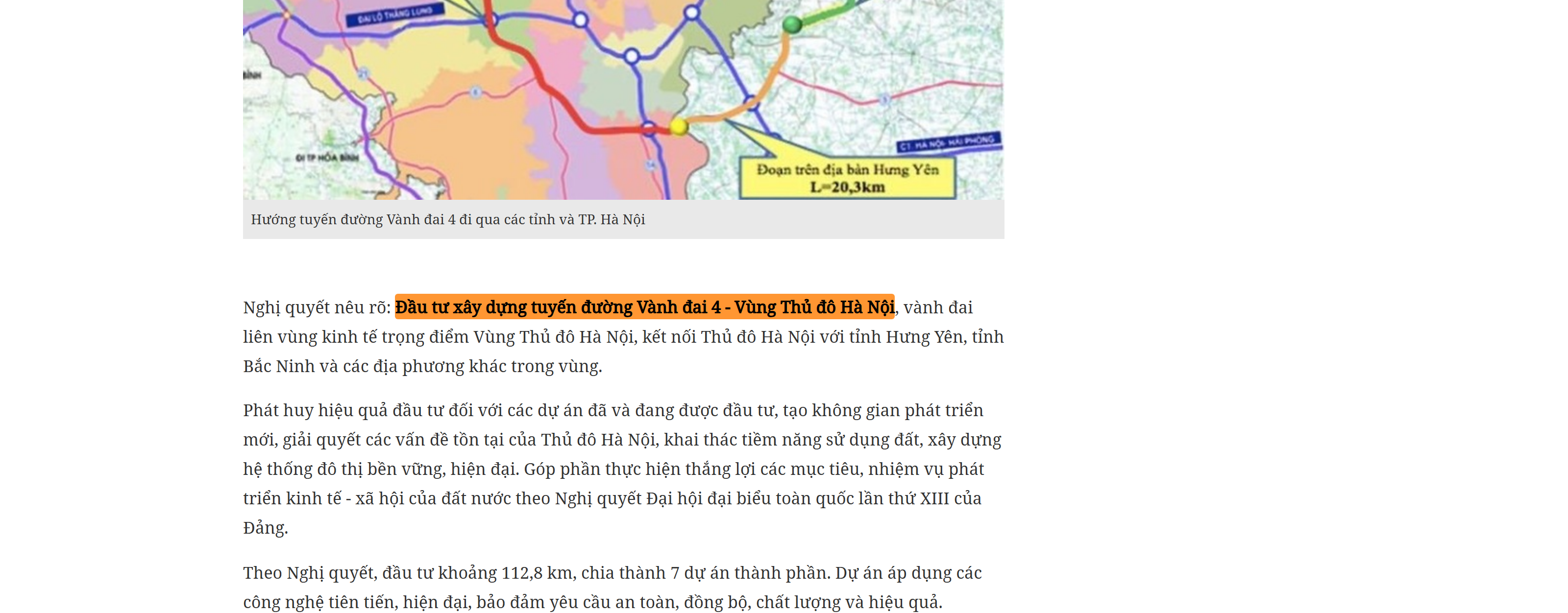 Source: Vietnam Government e-Portal, Resolution No. 56/2022/QH15 on investment policy for Capital Region Ring Road 4.
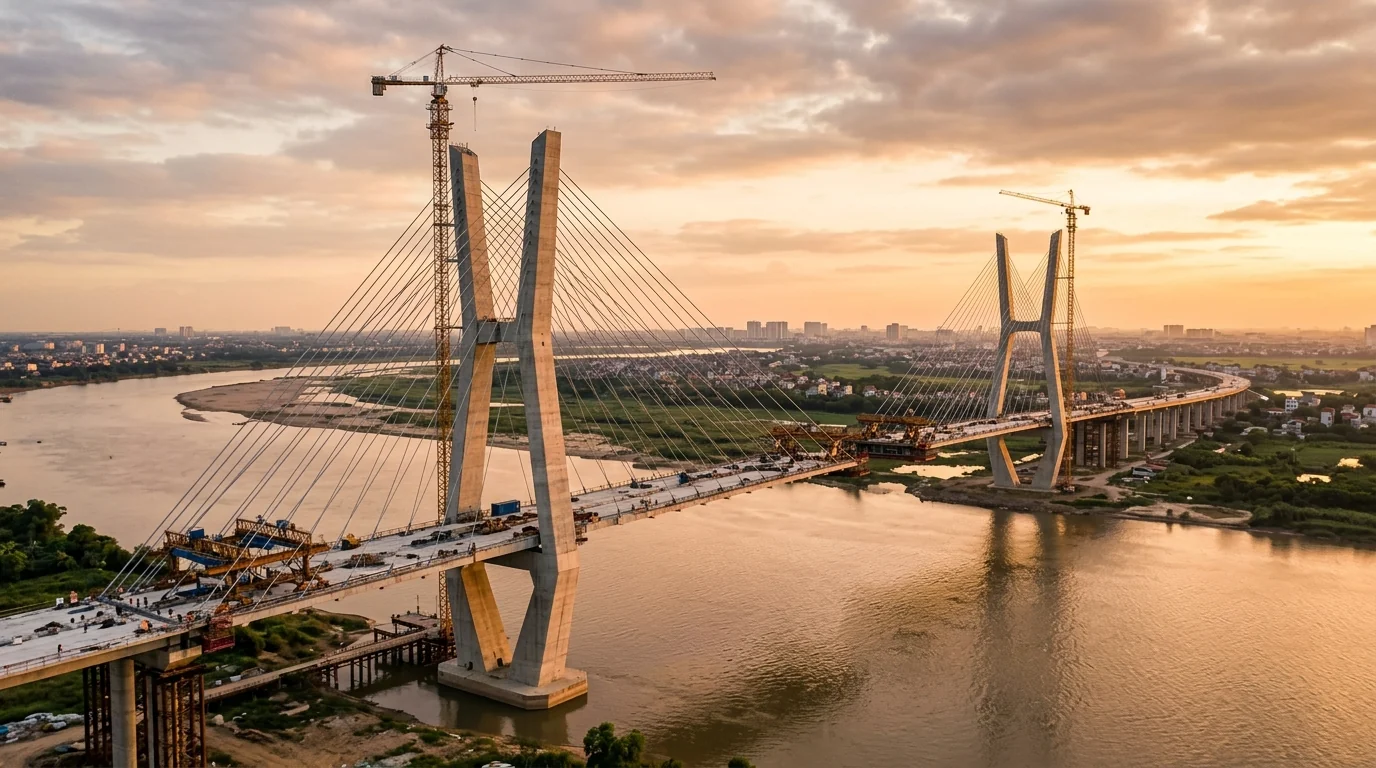 Civil engineering construction at the Red River bridge crossing on Ring Road 4, ensuring technical commissioning targets across 2026 - 2027.
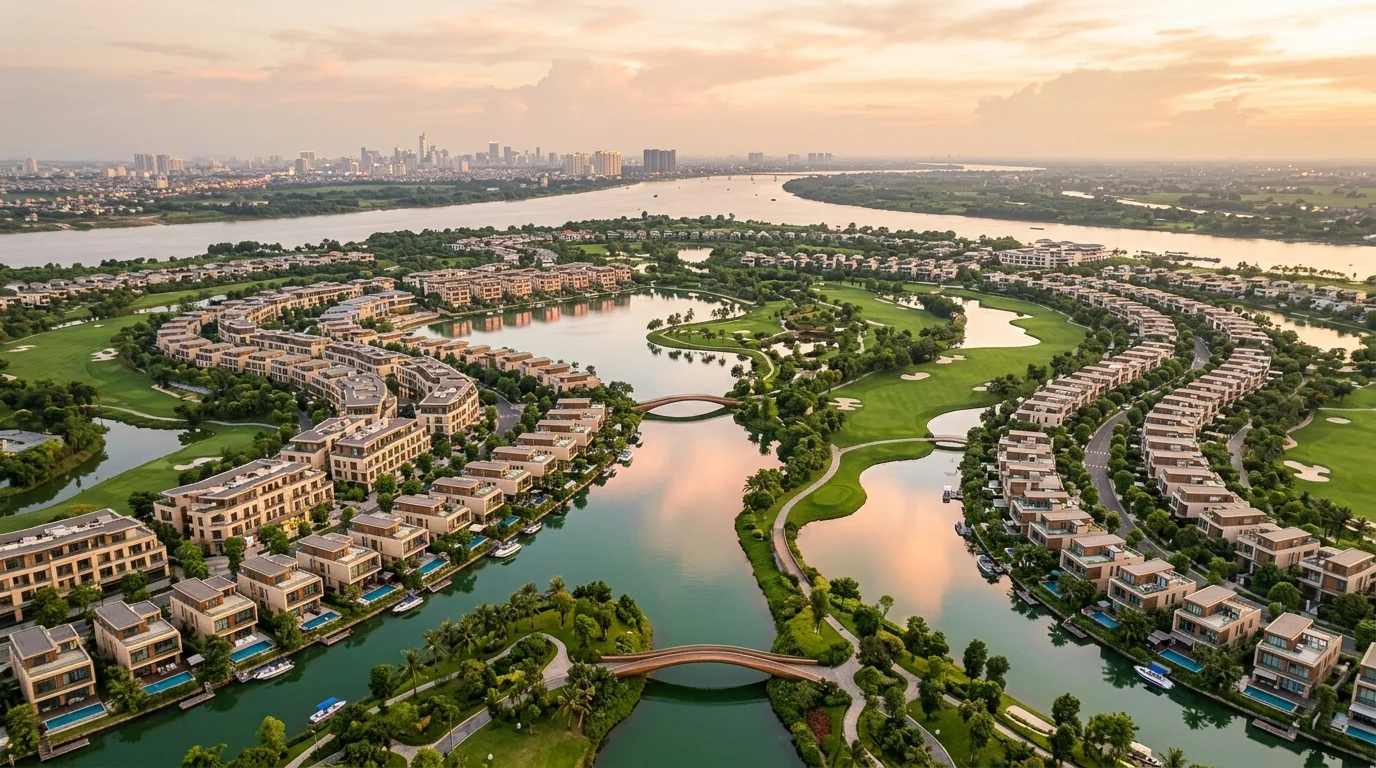 Master-planned riverfront eco-townships in Hung Yen directly benefiting from regional connectivity via the Ring Road 4 corridor.
 Dedicated financial structuring and portfolio management consultation space for Ring Road 4 infrastructure opportunities by Ms. Bùi Nguyệt Minh.
 Statutory 1/500 detailed master plan dossiers and cadastral road boundary verifications for property developments along Ring Road 4.